One of the clearest takeaways from the event was that DME teams are not asking for automation as a concept. They are asking for workflow support that can handle incomplete documentation, payer delays, exception-driven work, and the ongoing need for staff oversight across intake, authorization, and revenue operations.
What stood out at Medtrade
The strongest conversations were grounded in operational detail. Teams wanted to understand how automation could reduce repetitive work without hiding the issues that still require human judgment. That made Medtrade less about generic digital transformation and more about practical workflow design.
Manual intake is still slowing teams down
Faxes, emails, missing information, and repeated data entry are still consuming staff time that could be redirected toward patient service and higher-value work.
Authorization delays keep creating downstream drag
Eligibility checks, payer requirements, and missing documents continue to interrupt momentum well before revenue is ever secured.
Denials and rework are draining staff capacity
Teams are still dealing with avoidable rework loops, inconsistent handoffs, and missing documentation that complicates the revenue cycle.
Keep your EMR. Power it with Pods. That message resonated at Medtrade because DME teams want progress without a full operational reset.
What FlowPod demonstrated
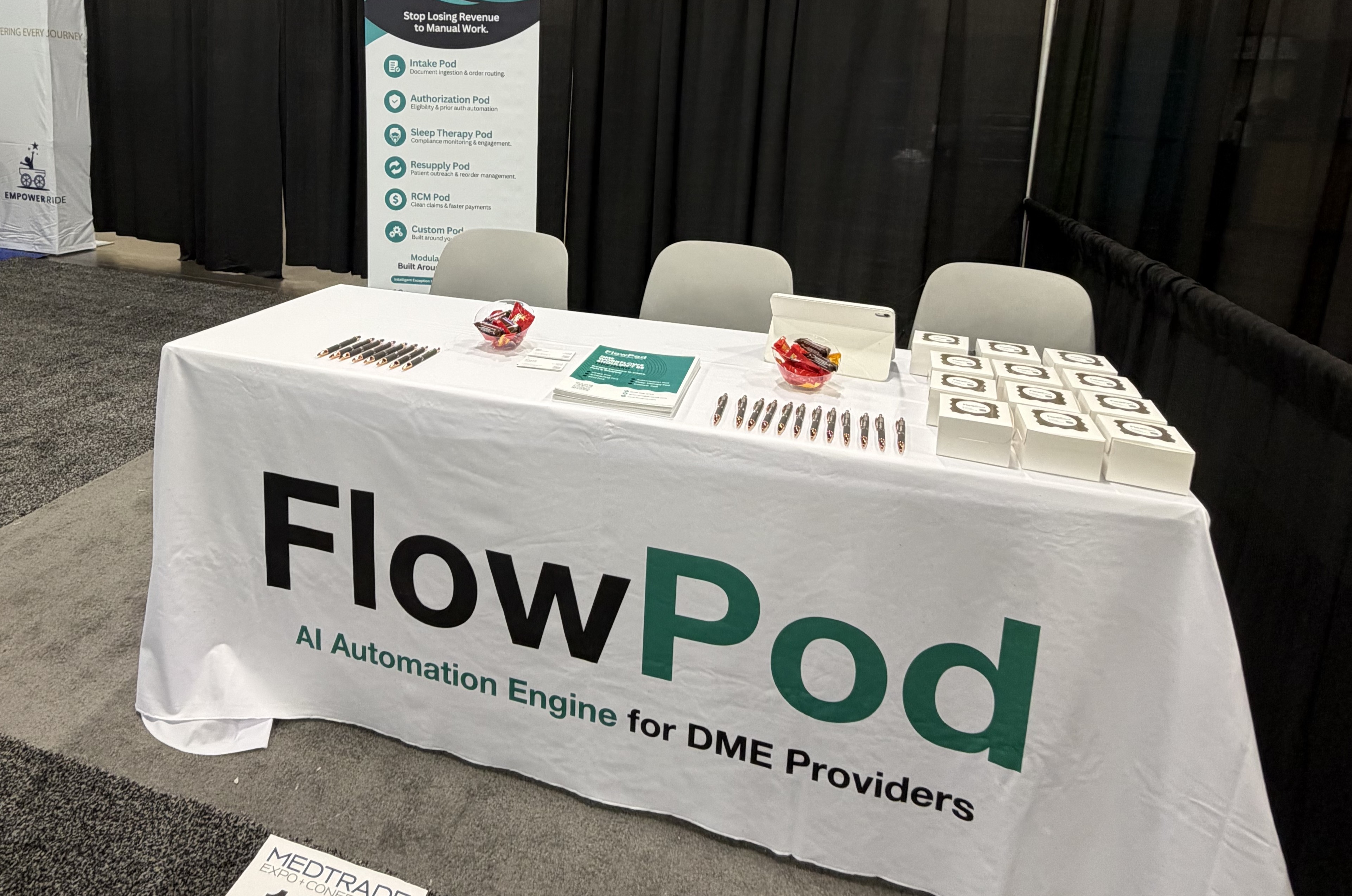
At Medtrade, we framed FlowPod around a connected view of DME workflow automation. The emphasis was not only on speeding up isolated steps, but on improving how work moves from intake through authorization and into downstream revenue operations. That perspective aligned closely with what providers and operational leaders said they needed most.
We also highlighted the role of exception handling and workflow visibility. For many teams, the real challenge is not simply getting work into the system. It is knowing where a task is stuck, what information is missing, and when staff need to intervene. That is where orchestration becomes more valuable than one-off task automation.
The Pods we highlighted at the event
The modular structure of FlowPod helped make the Medtrade conversations practical. Rather than presenting a single all-or-nothing transformation story, we showed how organizations can start with one workflow area and expand over time as operational needs evolve.
Intake and Authorization Pods
These were central to the Medtrade discussion because they address some of the most visible delays in DME operations, from document intake through payer-related friction.
RCM Pod
The RCM story mattered because teams are looking for ways to reduce denials, support cleaner claims, and improve cash-flow visibility without creating more manual oversight.
Schedule and Sleep Therapy Pods
These showed how FlowPod can support continuity beyond the front end of the workflow, including coordination, readiness, and recurring patient processes.
Custom Pod and exception handling
For teams with unique business rules or handoff patterns, the Custom Pod story showed that workflow automation can still reflect operational nuance rather than flatten it.
Why the Medtrade conversations mattered
Medtrade made it clear that DME teams are looking for more than isolated efficiency gains. They want a more connected operating model, one that helps staff understand what is happening across the workflow and respond more confidently when exceptions appear.
That is why the conversations at the event consistently returned to orchestration, visibility, and practical workflow design. The need is not simply to digitize paperwork. It is to make work move more cleanly across the business while keeping teams in control of the moments that still matter most.