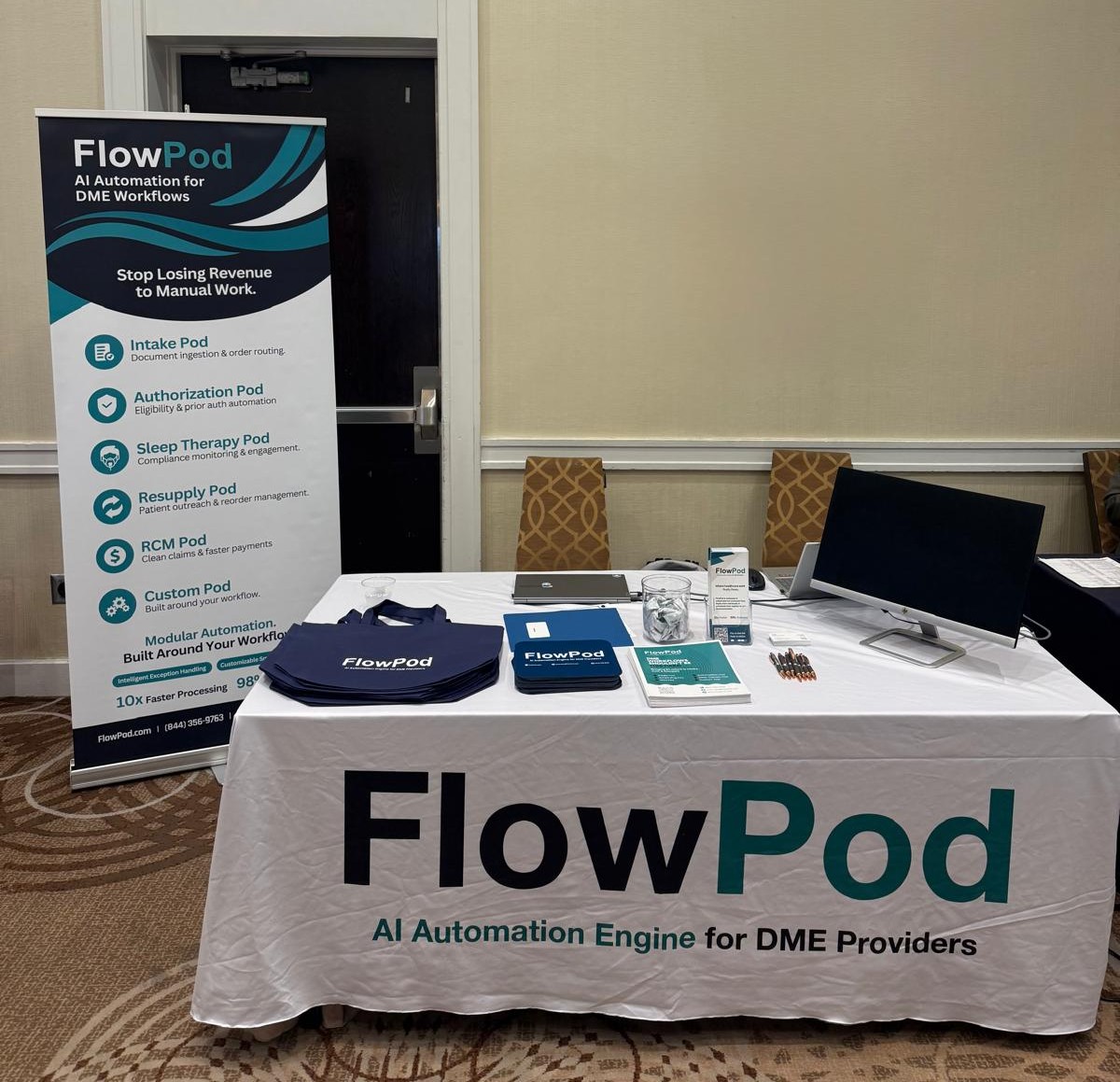
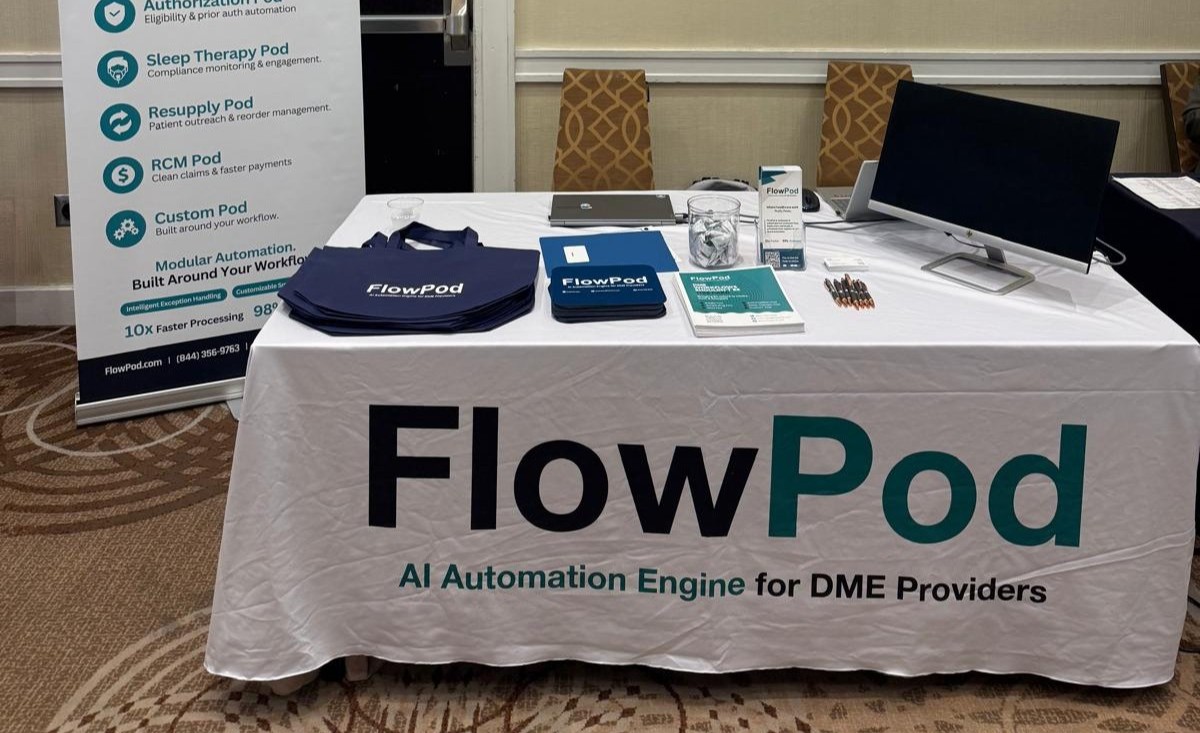
The conversations we had at PAMS reinforced something we hear often from DME teams: the goal is not just to automate one clean path. The goal is to make workflows easier to manage when documentation is incomplete, payer requirements change, and staff need better visibility across handoffs.
What stood out
The strongest discussions were not about automation in the abstract. They were about how teams can reduce manual work without losing control of the steps that still require judgment. That is where FlowPod fits best, because the platform is built around real workflow conditions rather than a perfectly scripted process.
Automation is becoming operational
Many teams are no longer asking whether automation belongs in DME. They are asking where it can improve throughput, visibility, and staff efficiency the fastest.
Exceptions still shape the workflow
Missing documents, payer issues, follow-up steps, and edge cases remain central to daily work. Teams want support for the real process, not just the ideal one.
Compatibility matters
The most interest came from organizations looking for technology that can work alongside existing systems and operational habits rather than force a full reset.
“More than automation. True orchestration.” That idea resonated throughout the event because providers want tools that connect the workflow, surface exceptions, and support real teams behind the scenes.
How FlowPod fits the conversation
FlowPod connects Pods across the DME workflow and helps providers automate operations from intake to revenue without replacing the systems they already rely on. The focus is not only speed. It is also visibility, exception handling, and workflow design that matches how a business actually runs.
That was especially relevant at PAMS because many of the conversations centered on backend friction. Teams talked about delays in intake, authorization work, operational rework, and the challenge of keeping everyone aligned across separate functions. FlowPod is designed to support those moments with connected workflows, configurable logic, and human oversight when needed.
What we shared at PAMS
We also used the event to show how FlowPod can start with one focused workflow or expand across multiple connected workflows. The modular structure helped make the conversation practical, because teams could see where a single Pod might help now and where a broader orchestration layer could support future growth.
Custom Pod
Built around the exact workflow, business rules, exception paths, and handoffs that make one DME organization different from another.
Authorization and Intake Pods
Useful for teams trying to reduce front-end delays, organize documents, and move referral work forward with fewer manual bottlenecks.
Order, Billing, and RePAP Pods
Relevant for organizations looking to improve operational continuity from order handling through recurring patient workflows and reimbursement work.
Connected workflow design
The bigger story is how Pods work together, giving teams a more complete view from intake through downstream follow-up and revenue activity.